Sale Price:
$85.00
Original Price:
$170.00
KNIFE SPECIFICATIONS
Due to imperfections on the handle and no maker’s mark, this knife is 50% off.
Santoku translates to “three virtues” as this multi-purpose knife can be used for meat, fish, and vegetables. It has a lightweight blade with a smooth cutting edge, making it comfortable for everyday cooking. It is the most widely used knife in households and is recommended for those new to Japanese kitchen knives.
Carbon steel knives offer unmatched sharpness, cutting performance, and edge retention. Together, the Nakiri, Deba and Santoku form the ultimate kitchen trio, covering every essential task with timeless craftsmanship designed to last generations.
BLACKSMITH
Kanemitsu (兼光) is a 93-year-old blacksmith from the Niigata prefecture in Japan. His workshop is in an old wooden school, surrounded by rice fields. Here, he hand-forges carbon steel kitchen knives and sickles. He is also one of only two swordsmiths in the region and has licenses to both forge and use a katana. He uses century-long techniques that have been passed down for generations, without the use of any modern technology. Forged and finished by hand, every knife has subtle variations with no two blades being alike. With no successor to carry on his workshop, each piece becomes part of a limited body of work. Kanemitsu now wishes to share his life’s work with a global audience for the first time.
CARE INSTRUCTION
Cleaning - Carbon steel is prone to rust, so hand-wash and dry directly after use. The knives are NOT dishwasher safe.
Rust - Store the knife lying flat or attached to a magnetic strip (never in a knife block) in a dry place to avoid rust. If rust appears, remove with a rust eraser or oil.
Sharpening - Sharpen with a whetstone. Due to their edge retention, they do not need sharpening often.
Chipping - Use a soft plastic or wooden cutting board and avoid cutting frozen items or thick bones to protect the blade’s edge.
Patina - Patina is a natural protective oxidation of the carbon steel and is blue/grey in appearance. It is safe and protects the steel.
KNIFE SPECIFICATIONS
Due to imperfections on the handle and no maker’s mark, this knife is 50% off.
Santoku translates to “three virtues” as this multi-purpose knife can be used for meat, fish, and vegetables. It has a lightweight blade with a smooth cutting edge, making it comfortable for everyday cooking. It is the most widely used knife in households and is recommended for those new to Japanese kitchen knives.
Carbon steel knives offer unmatched sharpness, cutting performance, and edge retention. Together, the Nakiri, Deba and Santoku form the ultimate kitchen trio, covering every essential task with timeless craftsmanship designed to last generations.
BLACKSMITH
Kanemitsu (兼光) is a 93-year-old blacksmith from the Niigata prefecture in Japan. His workshop is in an old wooden school, surrounded by rice fields. Here, he hand-forges carbon steel kitchen knives and sickles. He is also one of only two swordsmiths in the region and has licenses to both forge and use a katana. He uses century-long techniques that have been passed down for generations, without the use of any modern technology. Forged and finished by hand, every knife has subtle variations with no two blades being alike. With no successor to carry on his workshop, each piece becomes part of a limited body of work. Kanemitsu now wishes to share his life’s work with a global audience for the first time.
CARE INSTRUCTION
Cleaning - Carbon steel is prone to rust, so hand-wash and dry directly after use. The knives are NOT dishwasher safe.
Rust - Store the knife lying flat or attached to a magnetic strip (never in a knife block) in a dry place to avoid rust. If rust appears, remove with a rust eraser or oil.
Sharpening - Sharpen with a whetstone. Due to their edge retention, they do not need sharpening often.
Chipping - Use a soft plastic or wooden cutting board and avoid cutting frozen items or thick bones to protect the blade’s edge.
Patina - Patina is a natural protective oxidation of the carbon steel and is blue/grey in appearance. It is safe and protects the steel.

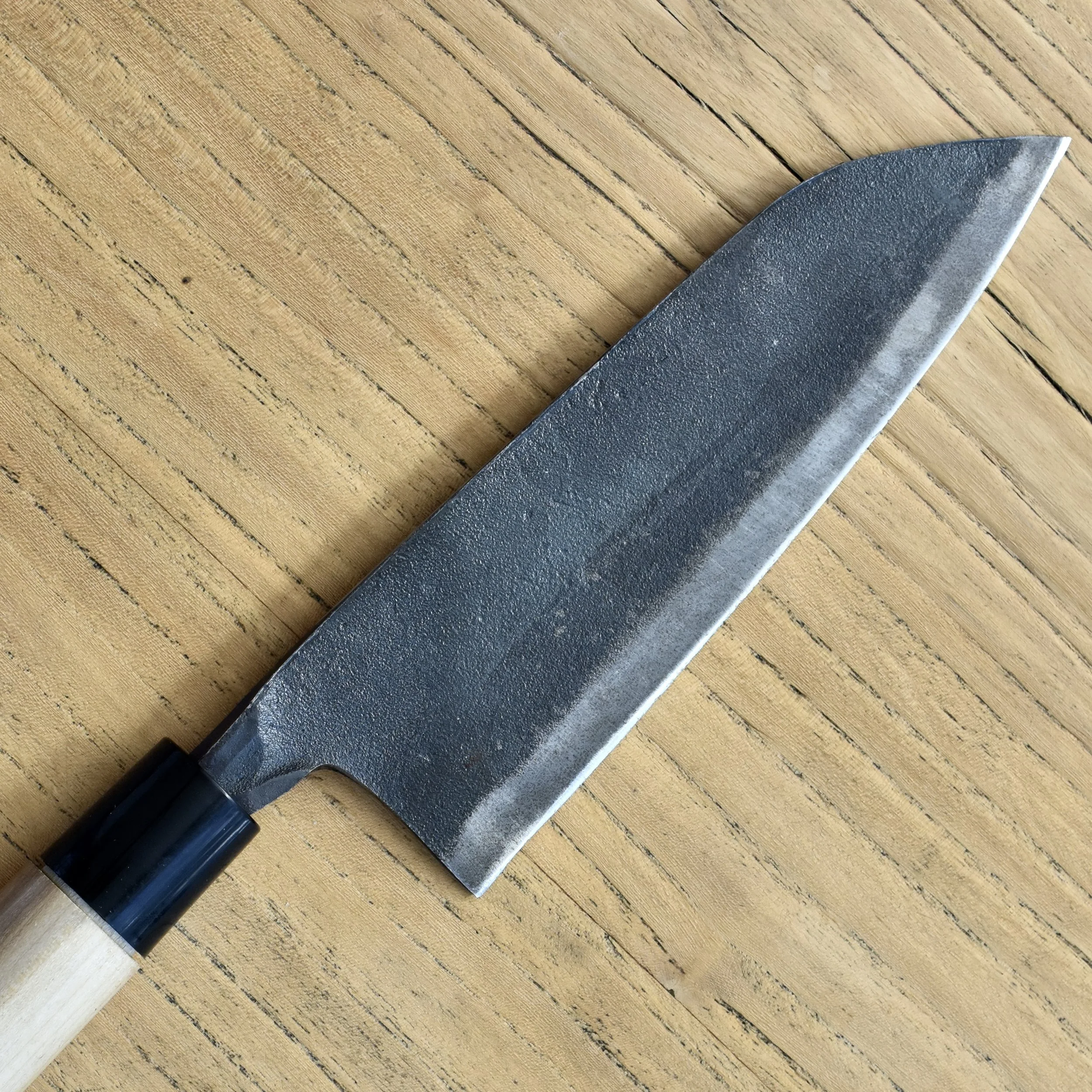 Image 1 of 6
 Image 2 of 6
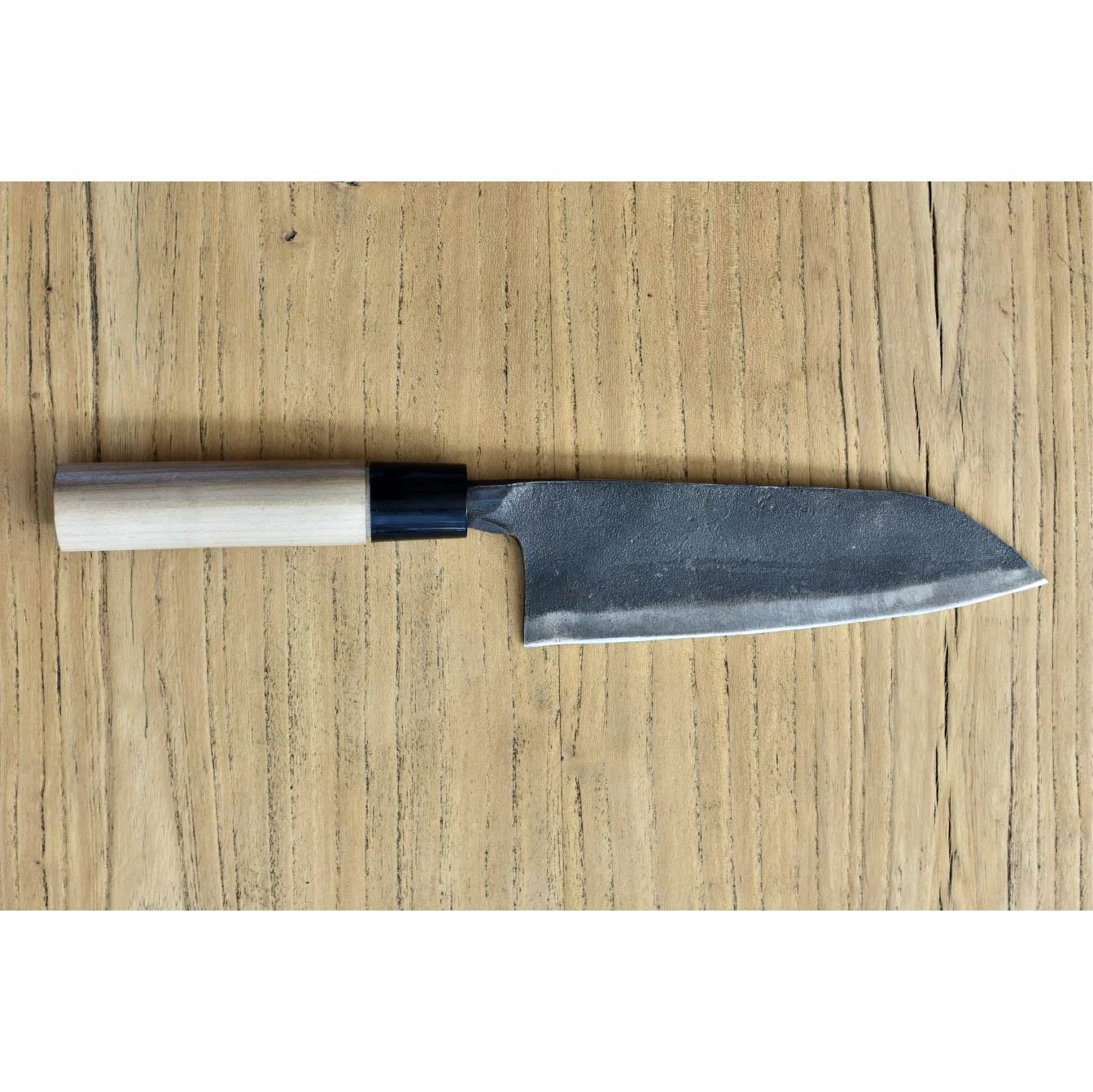 Image 3 of 6
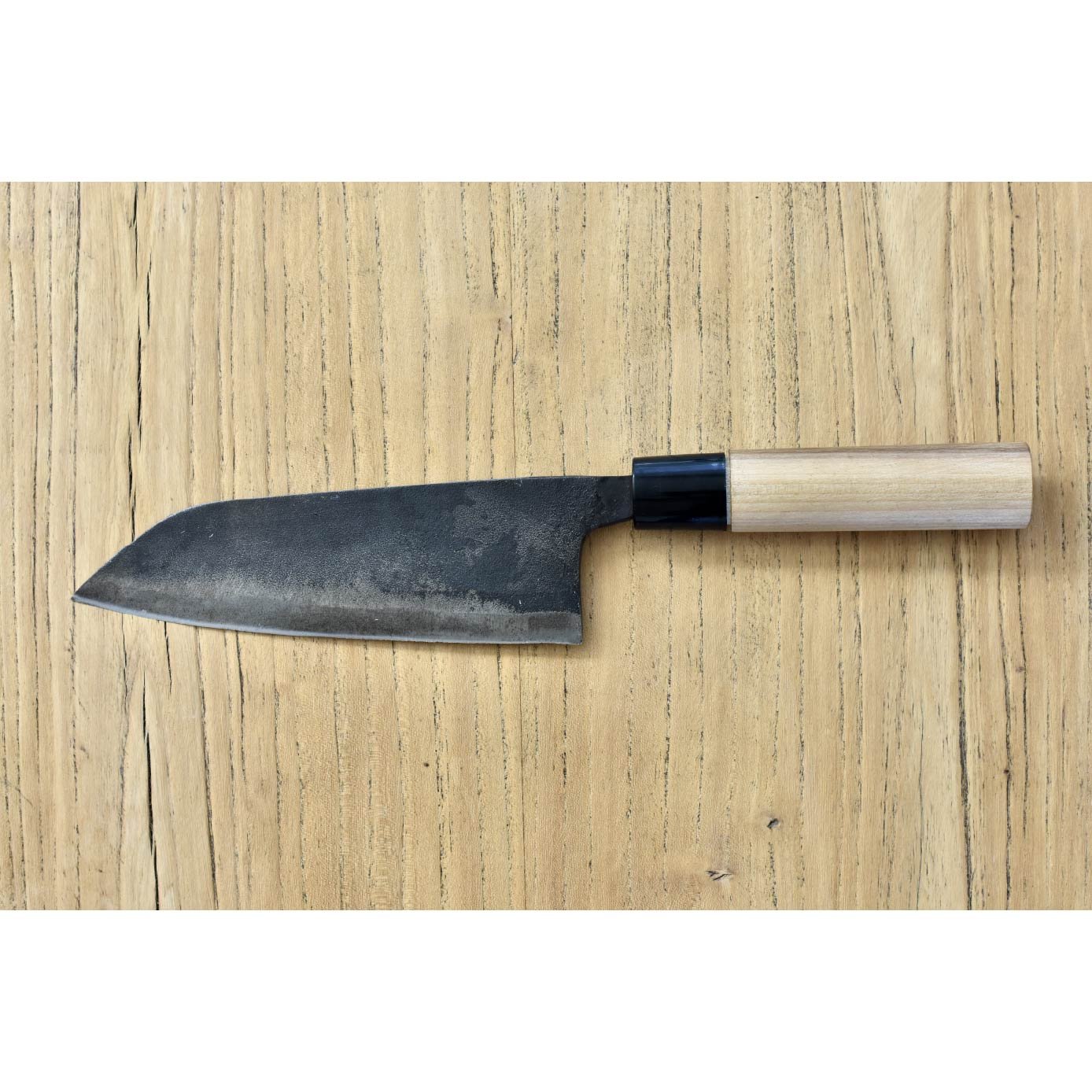 Image 4 of 6
 Image 5 of 6
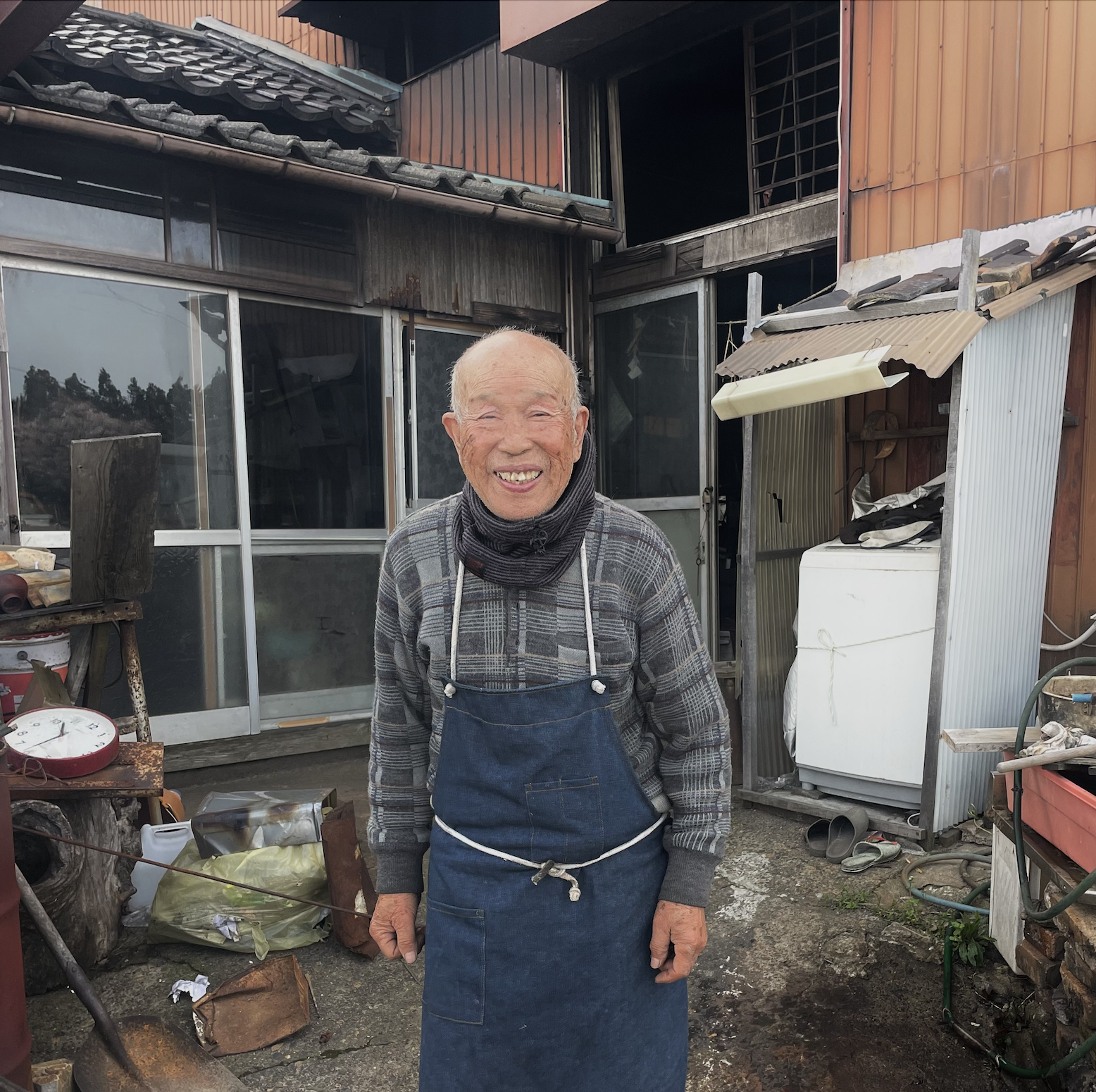 Image 6 of 6